We wanted to develop
instructors, not just pass candidates.

Mode-I is a training product developed by Mark Revill-Johnson of Revs – Road Skills for Life, drawing on his experience delivering I Endorsement courses and a belief that theory is only one part of becoming a capable driving instructor.

01 / THE QUESTION

Knowing the theory is only
one part of the picture.

Road rules, educational principles and lesson plans provide a foundation. But to teach someone safely, an instructor must first be able to drive consistently to a high standard — demonstrating sound judgement, road positioning, observation and hazard management in real traffic.

That is still only the beginning. The instructor must also recognise what the learner is doing and why: their confidence, attention, habits, responses to risk and understanding of the task. Students bring different backgrounds, capabilities, behaviours, communication preferences and learning needs. Effective instructors observe these differences and adapt the lesson, the explanation and the pace accordingly.

There are many valid ways to train an instructor. Mode-I was designed to give these practical skills time to develop alongside the theory, with guided experience and reflection rather than treating the qualification as a list of tasks to complete.

Being able to explain driving is important. Being able to observe, understand and develop the person learning to drive is what makes an instructor.

Start prepared.
Progress with confidence.

Two concerns helped shape the Mode-I approach: relying heavily on independent preparation before contact training begins, and expecting someone to commit to a whole course before they know whether instructing is right for them.

01 / PREPARATION

Not everyone has four weeks free for self-study.

Some course formats ask candidates to undertake around four weeks of independent preparation before they attend. For people juggling work and family life, that work can be difficult to complete. If it is left unfinished, a candidate may arrive underprepared and feel overwhelmed by the pace and demands of the course.

Our answer: Mode-I places the essential teaching and guided learning within the training modules. Rather than depending on a large block of unsupported pre-course study, candidates learn with an instructor and receive feedback as they develop. Practising between modules is still encouraged.

02 / COMMITMENT

What if instructing is not the right fit?

Not every person who considers becoming an instructor will decide to continue. Some may discover that the role is different from what they expected; others may find that they need more development before progressing. Finding that out early should be an informed decision, not a judgement of the individual.

Our answer: With pay-as-you-go enrolment, candidates can start with the first module and pay for subsequent modules as they progress, rather than paying the full programme fee in advance. This reduces the amount prepaid if someone chooses not to proceed or cannot meet the required standard. Any outstanding obligations remain subject to the agreed booking and cancellation terms.

Good instruction deserves
time to take shape.

The idea behind Mode-I was to build learning in a logical sequence. First, establish the foundations of driver education. Then refine and demonstrate your own driving standard. Only then move into recognising learner behaviours and needs, building rapport, adapting teaching methods, coaching safely and assessing progress.

Crucially, the time between modules is an opportunity to consolidate skills in everyday motoring and return with questions and experience to discuss. The course offers 15 trainer-guided days across five three-day modules, with each stage preparing the ground for the next.

We also wanted an accessible route for people already in employment. Candidates can work between modules and pay five instalments of $1,350 ($6,750 total, including GST) as they progress, or pay $6,500 including GST upfront for all modules and save $250. Applicable enrolment, cancellation and assessment conditions are explained before booking.

Built around the
reality of teaching.

The course develops the whole instructor: driving competence, the ability to recognise individual learner needs, adaptable coaching and guided practice — not theory in isolation.

01

Drive to a higher standard

Develop consistent personal roadcraft, hazard awareness, decision-making and demonstration skills before taking responsibility for teaching another driver.

02

Read the learner, not just the road

Notice behaviour, confidence, attention, understanding, progress and risk. Recognise individual needs rather than assuming every student will respond in the same way.

03

Adapt the way you teach

Build rapport and adjust explanations, questioning, demonstrations, pace and feedback to the person in the passenger seat — not a fixed learning-style label.

04

Learn with guidance and practise

Learn the essential material with trainer support instead of relying on four weeks of independent study. Consolidate skills between modules and apply them in practical coaching where suitable learners are available.

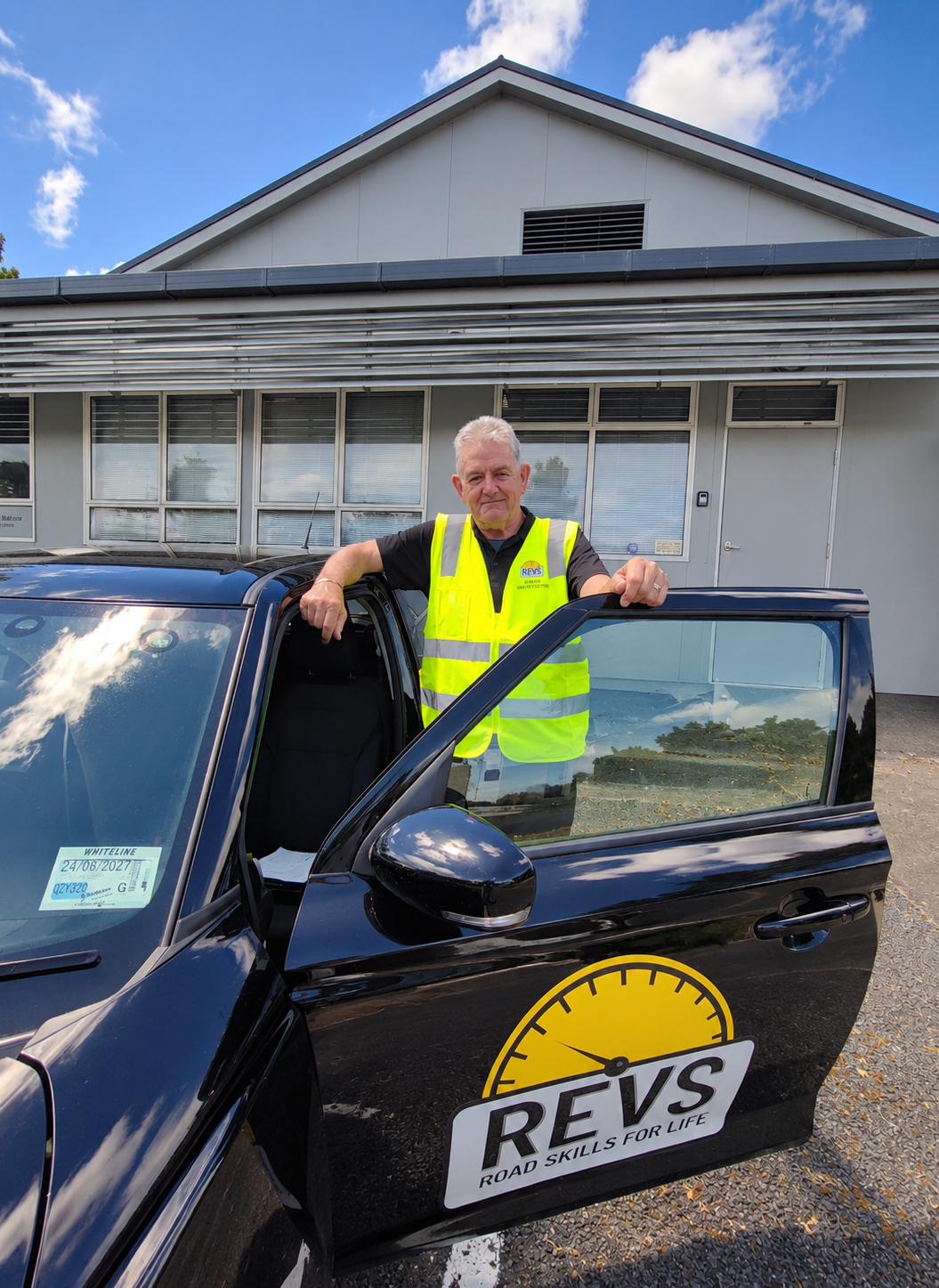
Gavin beside a Revs driver-training car

From knowing how to drive to
knowing how to teach.

Real learners do not arrive with a script. One may be nervous, another overconfident. One may follow a demonstration quickly, while another needs an explanation broken into smaller steps. An instructor must spot behaviour and developing habits, judge the level of risk, ask good questions and adjust their coaching in the moment.

That is why Mode-I moves beyond personal driving standards and theory into rapport, observation, needs assessment, individual training plans, lesson delivery and meaningful feedback. We aim to involve learners through local schools and mentoring schemes where suitable arrangements allow; structured role-play also forms part of assessment.

Explore the five modules

Created by Mark.
Grounded in experience.

Mark Revill-Johnson of Revs – Road Skills for Life with a motorcycle

Mark Revill-Johnson

Developer of Mode-I · Director, Revs – Road Skills for Life · Former President, New Zealand Institute of Driver Educators

Mode-I is Mark's training product, developed through Revs – Road Skills for Life. Having previously delivered I Endorsement courses, Mark used that direct involvement in preparing instructors — alongside his experience in roadcraft, driver education and workplace training — to shape a more progressive, practical programme.

The course reflects his belief that candidates should have the opportunity to arrive ready to learn, receive guided instruction rather than face a large independent study burden, and develop teaching skills progressively before taking responsibility for real learners. The aim is not simply to complete an assessment, but to become capable of teaching safely, confidently and effectively.

Designed for delivery throughout New Zealand. Mark plans to train suitable regional course trainers in the Mode-I syllabus and personally audit their delivery and assessment practices, supporting a consistent standard as the national network grows.

Explore Mark's professional background

A change of gear.
A change of role.

Mode reflects both modular learning and the change in mindset required when moving from driver to instructor. I is the New Zealand Driving Instructor Endorsement. Our refined wordmark uses a distinctive I and a red hyphen to express the change of mode simply and clearly.

That's why our strapline is “Switch to instructor mode.”

Find more answers

Grounded in learner-centred practice.

NZTA's guidance for driving instructors identifies practical coaching, observation and learner-centred communication as important components of high-quality driver education. Mode-I's approach reflects those principles.

Read NZTA's Learning Systems for Driving Instructors manual

Become the instructor you would want to learn from.

Explore the programme designed to develop confident, thoughtful teaching — one guided module at a time.

Explore Mode-I